Clear, reliable communication is fundamental to workplace safety and productivity. In many environments, communication is not just important — it is critical. Whether coordinating emergency response, managing first aid incidents or responding to fire alarms, organisations rely on communication ...
Continue reading
Topics:
Lone Workers,
IP DECT
When lone workers sound the alarm for help, swift support is essential. Therefore, knowing exactly where that individual is can help a business's response team locate them, as quickly as possible, saving crucial time in an emergency....
Continue reading
Topics:
Lone Workers,
IP DECT,
Indoor Location,
Man-Down
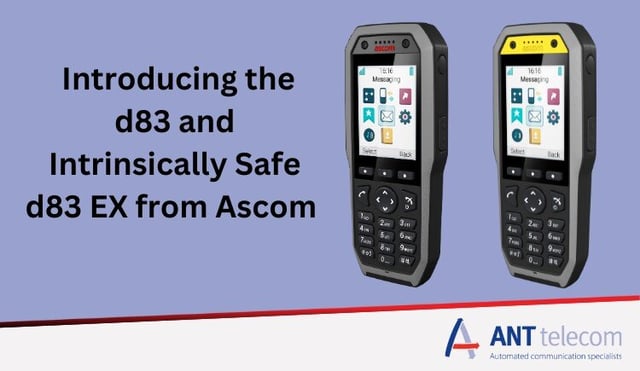
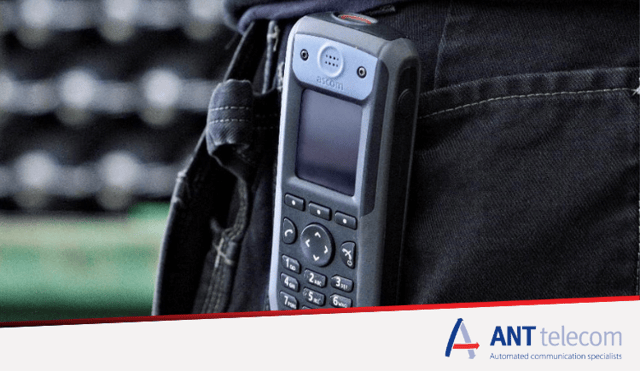
The new Ascom d83 and d83 EX DECT mobile devices are quite possibly the toughest, most versatile enterprise-grade DECT handset ever made: delivering the voice quality, reliability, messaging and alarm functions demanded in today’s workplaces....
Continue reading
Topics:
Lone Workers,
ATEX,
IP DECT
DECT stands for Digital Enhanced Cordless Telephones and commonly found in peoples’ homes as well as in businesses. An IP DECT system, as opposed to domestic DECT, can be used by multiple people (hundreds if necessary) operating across a whole premises or site....
Continue reading
Topics:
Lone Workers,
IP DECT
DECT stands for Digital Enhanced Cordless Telecommunications. It is a wireless standard built for voice, running on its own radio band (1880 to 1900 MHz in the UK), so DECT phones do not share airtime with Wi-Fi or depend on mobile signal. IP DECT runs the base stations over your site's existing IP ...
Continue reading
Topics:
Lone Workers,
Mobility Solutions,
IP DECT
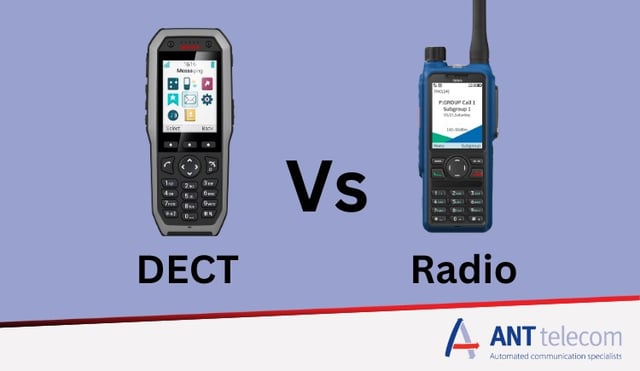
IP DECT and Digital Radio are both communication technologies that assist mobile workforces. They have similar functionality, for instances handsets can both support voice and messaging features, built in panic buttons and tilt sensors to protect lone workers....
Continue reading
Topics:
Digital Radio,
IP DECT
Lone working is a concern for many companies, especially pharmaceutical manufacturers, who deal with a variety of potentially dangerous chemical substances. Staff and premises are at risk due to lone working practices. With automation and twenty-four-hour operational requirements, it’s often the ...
Continue reading
Topics:
Lone Workers,
IP DECT