
In manufacturing, temperature is rarely just a number on a display. It influences how materials behave, how processes perform, and ultimately whether finished products meet quality expectations.
Most manufacturers recognise this. Many already have some form of temperature monitoring in place — a data logger on a fridge, a manual check on an oven, a sensor built into a tank or piece of equipment. On the surface, it feels like the problem is covered.
In practice, it often isn’t.
Monitoring exists, but visibility doesn’t
Temperature monitoring in manufacturing usually grows organically. It’s added where a problem has occurred before, or where compliance demands it. Over time, this leads to a mix of approaches.
Some temperatures are checked manually. Others are logged automatically but reviewed infrequently. Data might live on individual devices, spreadsheets, or systems that don’t talk to each other. Alarms, if they exist, may only be visible on a local screen that relies on someone noticing it.
This works — until operations change.
Materials that were once stored in a single controlled location are moved closer to production. Smaller fridges appear on the shop floor. Processes are spread across different areas. Suddenly, temperature-sensitive assets are distributed, but monitoring remains fragmented.
The result is not a lack of data, but a lack of confidence.
Issues are discovered too late
Temperature-related problems rarely happen at convenient times.
A fridge storing sealants drifts out of range overnight. A curing process runs slightly hotter for longer than expected. A production area warms up just enough to affect a coating or material.
These issues don’t usually cause immediate failures. Instead, they quietly undermine quality until something else highlights the problem — a failed inspection, inconsistent results, wasted materials, or rework.
When that happens, teams are left asking the same questions.
When did this start? How long was it out of tolerance? Did it affect anything else?
If temperature data is scattered across devices or only reviewed periodically, those answers are hard to come by. Engineers and managers spend time investigating instead of preventing. Staff are called in simply to check whether something is still wrong. Manual checks increase, adding effort without improving assurance.
What began as a simple monitoring requirement turns into an operational burden.
Data only becomes valuable when it can be used
As manufacturers start to take temperature monitoring more seriously, another challenge often emerges — not around sensors, but around data.
Collecting data is one thing. Being able to use it effectively is another.
When temperature and related data is stored across multiple platforms, devices, or spreadsheets, analysing it becomes slow and inconsistent. Trends are difficult to spot. Correlations between processes, assets, and outcomes are easy to miss. Valuable insight is often locked away simply because the data isn’t accessible in one place.
By contrast, when accurate data is collected consistently and stored centrally, it becomes far easier to analyse what’s really happening. Patterns start to emerge. Root causes can be identified more quickly. Improvements can be based on evidence rather than assumption.
This becomes increasingly important as new analytical tools — including AI — continue to develop. These tools rely on clean, well-structured data. When that data is fragmented or incomplete, their value is limited. When it’s reliable and accessible, detailed analysis that once took days can be done in minutes.
The result is better insight into how temperature and other factors affect quality, consistency, waste, and efficiency — without fundamentally changing how operations work day to day.
Start with temperature, design for more
The most effective improvements don’t start with technology. They start with understanding how temperature affects real processes and assets on the shop floor.
At ANT Telecom, our approach is to listen first. We work with you to understand where temperature genuinely matters, where current monitoring falls short, and what good visibility would look like in day-to-day operations.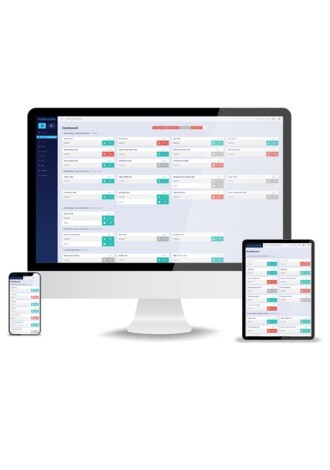
From there, a wireless temperature monitoring system makes it possible to take a more practical approach.
Sensors can be placed where temperature actually affects materials or processes — inside fridges, near production areas, or within equipment — without complex installation. Data is available in near
real time and can be accessed remotely, rather than being locked to a single location.
Alerts are delivered to the people who need to act, not just displayed on a screen. Issues are seen early, while there’s still time to intervene.
Crucially, the same platform doesn’t have to stop at temperature. As confidence grows, additional sensors can be introduced to monitor related conditions without replacing what’s already in place. This allows manufacturers to improve oversight gradually, rather than committing to a large, rigid system upfront.
Moving from reactive to informed
Better temperature monitoring isn’t about collecting more data. It’s about making data useful.
When temperature information is visible, timely, and connected to how assets and processes actually operate, teams can make better decisions. Problems are identified earlier. Unnecessary call-outs are reduced. Quality issues are prevented rather than investigated after the fact.
What starts as a need to monitor temperature often becomes something more valuable: a clearer understanding of how conditions affect production.
A practical partner, not just a platform
Every manufacturing environment is different. That’s why there is no single “right” monitoring setup.
Our role is to help organisations move forward at the right pace — starting with for example temperature, learning from what the data reveals, and expanding only where it adds real value. Not every asset needs to be monitored. Not every parameter needs an alarm.
By focusing on what matters most today, while keeping tomorrow in mind, manufacturers can build confidence in their monitoring approach without adding unnecessary complexity.
Temperature may be the starting point — but it doesn’t have to be the limit.
If you’re reviewing how temperature is monitored across your operation, please contact us for a free assessment — it’s a simple way to understand where visibility could be improved and where changes would genuinely add value.