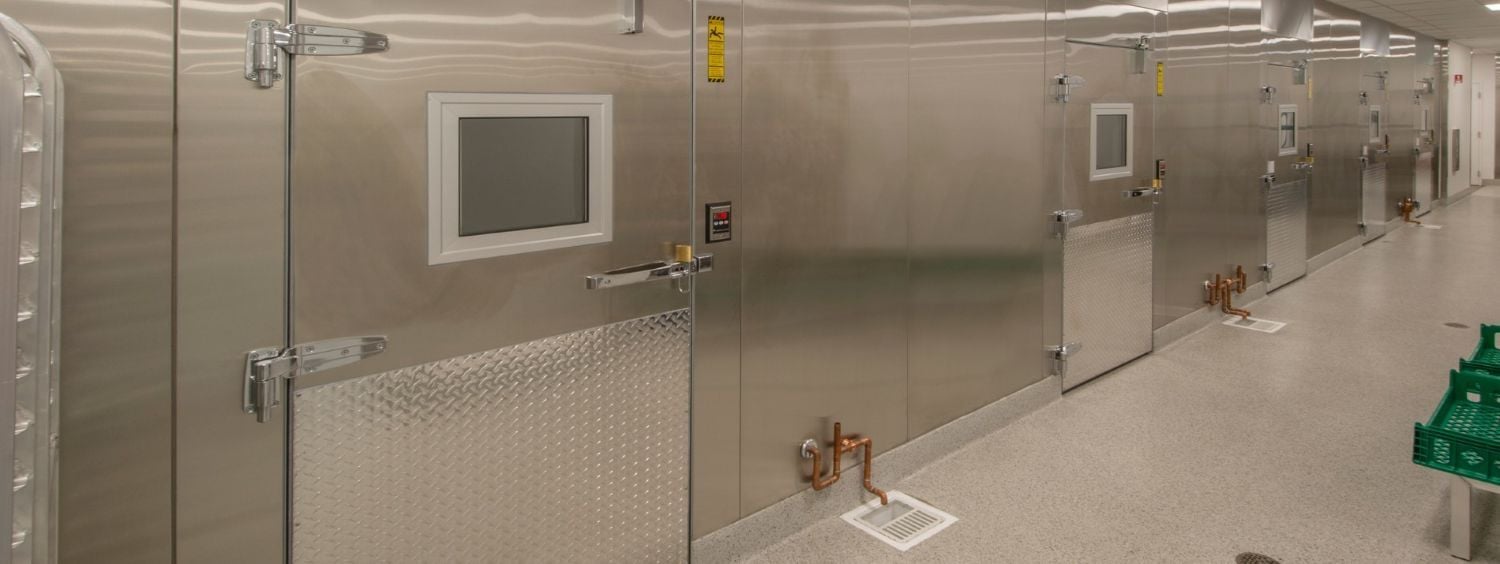
Temperature control plays a critical role in modern organisations where product integrity, safety, quality, and compliance cannot be left to chance. From hospitals storing medicines and blood products, to food producers managing cold chains, to manufacturers controlling sensitive processes, maintaining stable temperature conditions is fundamental to operational success.
Yet despite its importance, monitoring approaches are often fragmented or no longer aligned with how organisations operate today. As estates grow, regulations tighten, and staffing models change, many teams are reassessing how they detect issues, respond to incidents, and evidence compliance.
At its simplest, temperature monitoring is the process of measuring and recording temperature over time. In practice, it is far more than that.
Temperature data underpins decisions that affect patient safety, product quality, regulatory compliance, and business continuity. A fridge running just a few degrees out of tolerance can result in the loss of medicines or blood products. A freezer failure overnight can destroy months or years of research samples. In manufacturing, uncontrolled temperature or humidity can compromise materials, coatings, or sealants long before the issue becomes visible.
For many organisations, temperature monitoring is also a compliance requirement. Healthcare, life sciences, food production, and transport sectors are all subject to strict standards governing how temperature-sensitive assets are stored and monitored. These standards increasingly demand not just that temperatures are recorded, but that organisations can demonstrate how issues are detected, escalated, resolved, and audited.
Although the principles are straightforward, real-world implementation is rarely simple.
Large organisations often operate across multiple buildings, departments, and floors. Critical equipment may be located in areas that are intermittently staffed or difficult to access. While many organisations have automated systems in place, those systems don’t always support efficient response.
Alarms may appear on fixed screens that rely on someone noticing them. During the day, this can mean control room staff tracking down clinical or technical teams. Overnight, it may result in staff travelling to site simply to confirm whether an issue is still active — because data cannot be accessed remotely.
Older monitoring platforms and standalone loggers were often designed around local supervision rather than distributed teams. While they may capture data accurately, they can struggle to deliver it where and when it is needed most.
Common limitations include:
As expectations increase around accountability and resilience, these constraints become harder to justify.

Modern temperature monitoring systems take a fundamentally different approach. Rather than treating each fridge, freezer, or room as an isolated asset, they connect sensors into a wider monitoring platform that provides real-time visibility across an entire estate.
Wireless sensor technology has become a key enabler of this shift. Sensors can be placed directly where measurements are needed, including inside fridges, freezers, cold rooms, or industrial equipment, without the disruption of extensive cabling. Data is transmitted securely to a central system where it can be viewed, analysed, and acted upon from anywhere.
Crucially, these systems are designed around alerting and response, not just data capture. Temperature excursions trigger notifications based on defined thresholds and time delays, ensuring that staff are alerted before minor deviations become major incidents. Escalation paths can be configured so that alarms continue until acknowledged, reducing the risk of missed events.
Our temperature monitoring solution
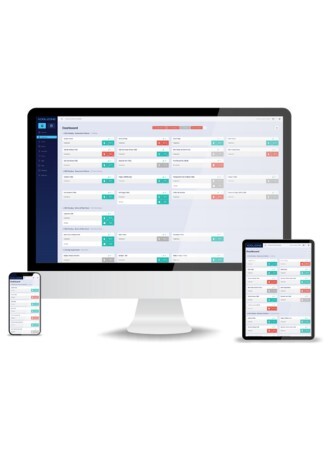
While chilled and frozen storage is often the starting point, many organisations extend monitoring to a wider range of environments.
This may include ambient areas, laboratories, production spaces, server rooms, or external infrastructure. Increasingly, the same platform is used to capture humidity, CO₂ levels, energy usage, or leak detection — providing a more complete picture of environmental risk.
Our automated wireless monitoring solution
Healthcare estates are complex, highly regulated, and operationally demanding. Critical assets are distributed across pharmacy, pathology, transfusion services, wards, and remote locations.
While automated systems are often already in place, effectiveness depends on how quickly information reaches the right people. Platforms that rely on staff being physically present to observe alarms can struggle overnight or at weekends.
Remote access to live and historical data allows teams to assess incidents quickly, determine whether action is required, and reduce unnecessary disruption — while maintaining patient safety and compliance.
In manufacturing, control of thermal conditions is closely linked to quality and consistency. Materials may require controlled storage before use and precise conditions during processing or curing.
Layouts are often distributed and evolve over time, making flexible, scalable systems essential. Many manufacturers begin with critical assets and expand coverage as processes develop
In infrastructure and industrial environments, monitoring supports asset protection and safety. Rail networks, plant rooms, and server environments depend on stable conditions, often in locations that are unmanned.
Reliable alerts and remote visibility help operators respond before issues escalate into failures or safety incidents.

Effective alerting is not about generating more alarms, but about delivering the right information to the right people at the right time.
Modern platforms allow sensible thresholds, time delays, escalation paths, and acknowledgement tracking — reducing alarm fatigue while improving accountability.

There is no one-size-fits-all solution, but organisations should look beyond individual devices and consider the wider operational context.
Key considerations include the environments being monitored, required accuracy and calibration, alarm and escalation needs, data retention periods, and the ability to scale as requirements change. Just as importantly, organisations should consider the support, maintenance, and expertise available to them over the life of the system.
Temperature monitoring is no longer just about passing inspections or avoiding losses. When implemented well, it becomes a strategic capability that supports safer working, better decisions, and more resilient operations.
By moving away from fragmented approaches and towards connected monitoring, organisations gain visibility and confidence that critical assets are protected around the clock.