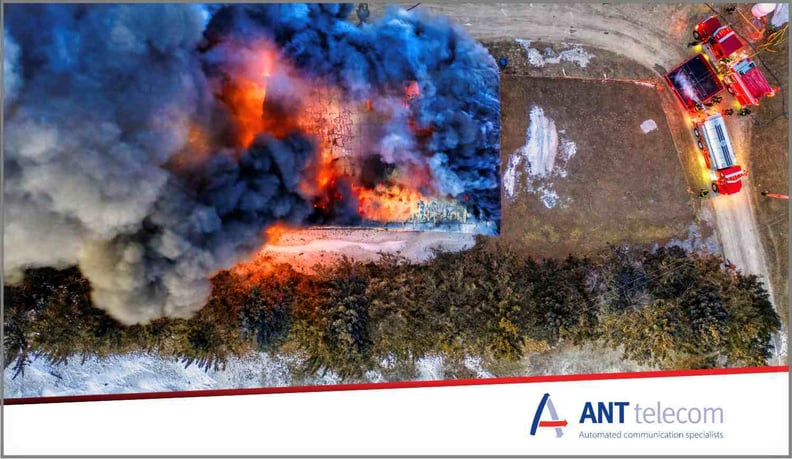
Industrial sites are busier, more complex, and more connected than ever before — yet many still rely on outdated processes when it comes to managing alarms. Boilers trip, fire systems activate, plant equipment faults, lone workers need help….and too often, the people who need to know simply don’t know.
It’s a scenario we’re seeing more and more across manufacturing sites, chemical plants, processing facilities, and any business with a highly mobile workforce: the alarms exist, but the awareness doesn’t.
And when an alarm goes unseen or unheard, risk increases instantly.
We're having these conversations regularly with companies. And when customers speak, we listen — and we help them turn complicated, disjointed systems into something simple, reliable, and safe.
Alarms That Don’t Reach the People Who Need Them
On many sites, critical alarms are trapped inside the control room or locked away in panels that depend on someone being in the right place at the right time. During busy periods, night shifts, staff shortages, or simple day-to-day movement around site, these alarms can be missed.
If no one is present — or only a lone worker is onsite — a fire alarm or boiler fault may go unnoticed until the consequences become serious.
Even more frustrating, many sites rely on a patchwork of systems that don’t talk to one another. Fire alarms, process alarms, boiler panels, and lone worker systems often sit on different technologies, managed by different suppliers. Nothing is joined up, nothing communicates, and nothing works together when it matters most.
All of this leaves sites exposed.
And when businesses feel exposed, they start adapting their operations around the limitations rather than fixing the root cause.
When Operational Workarounds Become Operational Risks
The real pain starts when these small gaps turn into operational headaches.
Teams perform spot-checks throughout the day, just to check boilers or cooling systems because there’s no automated notification. And operators can end up tied to a control room screen for entire shifts, unable to leave to complete other essential tasks because they’re the only person who can respond if something alarms.
Maintenance teams stay blind to issues that need their attention.
Managers remain unaware of problems developing outside working hours.
And the strain doesn’t just fall on safety — it hits people, productivity, cost, and confidence.
Industrial plants shouldn’t have to rely on chance, luck, or manual checks to keep people safe and keep processes running.
But without the right communication backbone, that’s exactly what happens.
Intelligent Alarm Integration Through Your Radio System
This is where we come in.
As a system integrator, we specialise in connecting the dots — bridging the gap between your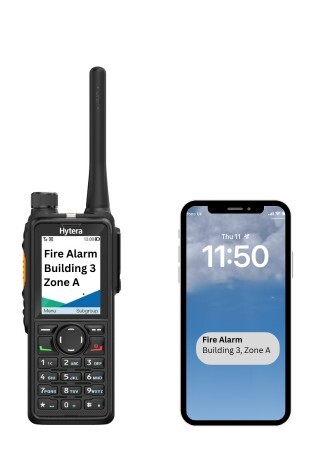 existing alerts, your radio system, and the teams who rely on real-time information. Because we understand both the communication equipment and the third-party systems behind your alarms, we can make them work together in a single, coherent way.
Using our middleware gateway, we integrate fire alarms, boiler alarms, process alarms, lone worker events, and other external signals directly into your radio network. The moment something happens, the right people know — wherever they are on site.
If your site is unmanned at night, we route notifications to selected off-site contacts via SMS - not as a simple fire-and-forget alert, but as messages that must be acknowledged by responders. If no one confirms receipt, the system continues to repeat and escalate the alarm until it’s clear the situation is being dealt with. If certain alarms should only reach specific teams, we set up targeted groups so the right people are alerted at the right time. And when emergency voice announcements are required, we automate clear, repeated broadcasts over every radio.
Instead of relying on one control room panel, your entire workforce becomes the detection system.
Instead of silence, you get certainty.
Instead of risk, you get resilience.
And because we handle installation, configuration, testing, and integration, everything is managed by one partner — no chasing multiple vendors, no compatibility headaches, no surprises.
Listening First, Solving Second
Our approach is simple: we listen to the challenges you’re experiencing, understand how your site operates, and build a communication layer that supports the way you work.
Every plant is different. Every alarm is different. Every process is different.
But the goal is always the same: make sure the right people know when something is wrong, and make sure they know immediately.
From fire alarms and boiler faults to lone-worker alerts and process events, we help industrial companies stay informed, responsive, and safe — without changing the systems they already rely on.
Whether you run a chemical plant, manufacturing facility, distribution centre, or any environment with a mobile on-site workforce, integrated radio-based alerting is one of the simplest and most powerful ways to protect your people and your production.
Learn more about how our critical alarm management approach ensures alarms are heard, acknowledged and acted upon.
Keeping Industry Connected, Protected, and in Control
If your site still relies on manual checks, control room visibility, or disconnected alarms, it might be time to rethink the way information flows. We’re here to help you take control of your critical communications — not by replacing everything you already have, but by making it all work better together.
When alarms reach the right people instantly, your site becomes safer, your processes become smoother, and your team becomes more confident.
That’s the power of intelligent integration.
And that’s the difference we deliver.
If you’d like to see how our critical alarm solution could improve your safety processes, cut costs, and streamline communication across your sites, get in touch. We’d love to show you what’s possible.