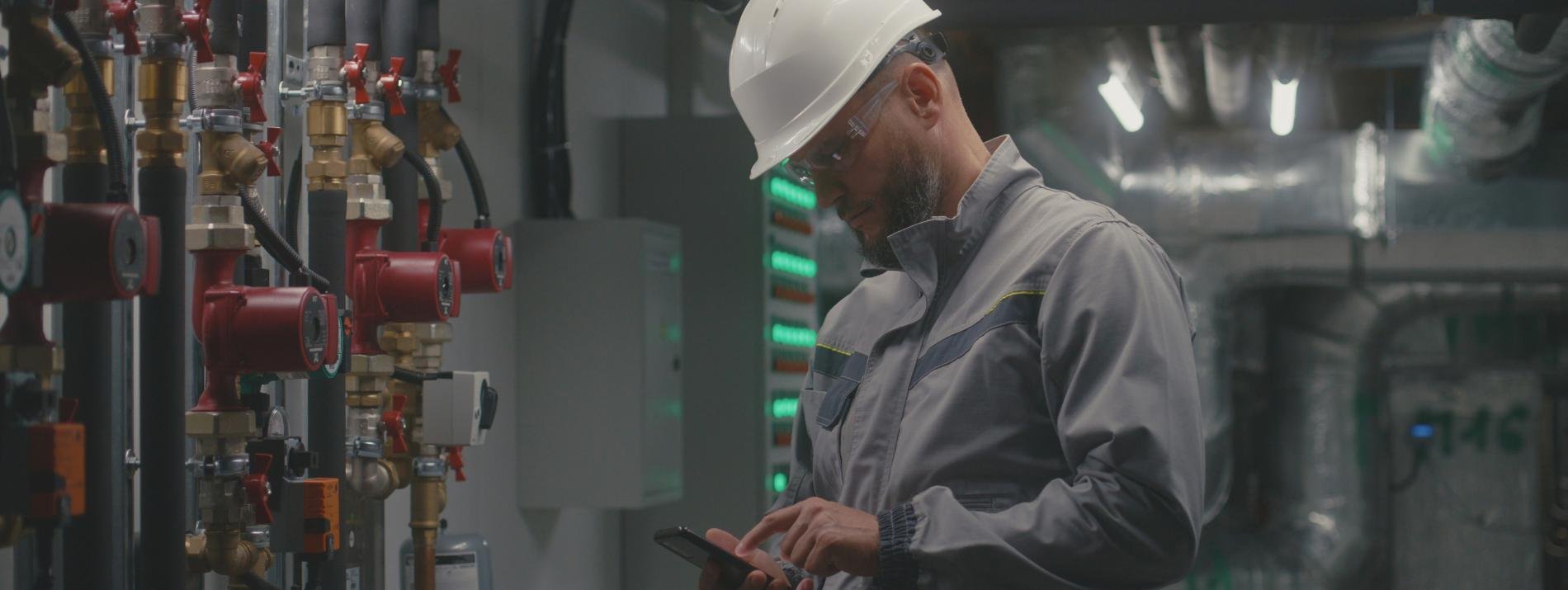
Organisations rely on numerous systems to monitor equipment, detect faults and protect employees. From fire panels and machinery to building management systems, gas detectors and lone worker devices, these technologies generate alarms when something requires attention.
However, detecting a problem is only the first step. What happens next is equally important.
If a critical alarm goes unnoticed or isn't acted upon quickly enough, equipment failures can disrupt production, environmental conditions can damage valuable stock, and safety incidents can put people at risk.
Critical alarm management systems help organisations respond more effectively by automatically notifying the right people, coordinating their response and escalating unanswered alarms.
ANT Telecom integrate alarm management software with existing monitoring systems and communication devices, helping organisations improve safety and reduce operational disruption.
A critical alarm management system is a software-based solution that receives alarms from different sources and manages how they are communicated, acknowledged, escalated and resolved.
Many organisations already have monitoring systems such as SCADA, building management systems and fire panels. However, alarms may only appear on a monitoring screen or within the system itself, relying on someone to notice them and contact the appropriate people.
Critical alarm management provides an additional layer of communication and coordination.
When a predefined alarm is triggered, the system automatically notifies designated employees through their communication devices. Recipients can acknowledge the alarm, share progress updates and confirm when the issue has been resolved. If nobody responds within a specified period, the alarm can automatically escalate to another person or team.
The same process can be applied to machinery faults, fire alarms, temperature excursions and lone worker safety alerts, with different response procedures configured for each.
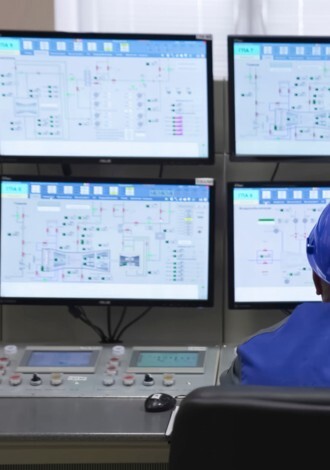
Many organisations operate several monitoring and safety systems, each generating different types of alarms.
Some alarms may only appear on monitoring screens, while others rely on emails, text messages or someone making a telephone call. This can create delays, particularly when employees are working across large sites or the intended recipient is unavailable.
Critical alarm management helps overcome these challenges by automatically directing important notifications to designated responders and providing visibility of how incidents are being handled.
This can help organisations reduce unnecessary downtime, improve employee safety and establish clearer responsibilities for responding to critical events. It can also reduce the burden on control room operators by removing the need to coordinate every response manually.
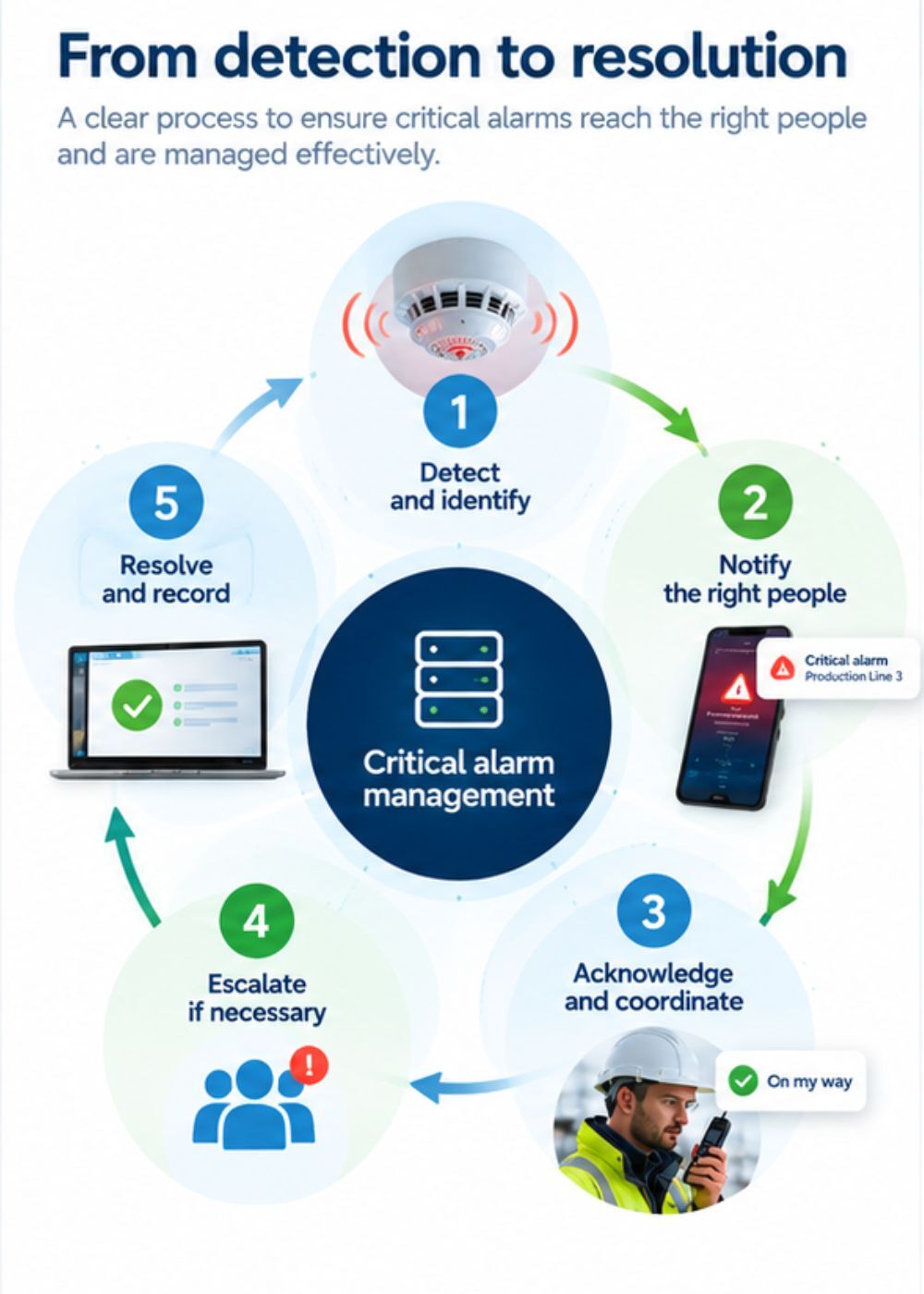
Although alarms originate from different systems, the process for managing them follows the same basic principles.
An existing monitoring system, sensor or safety device generates an alarm. Predefined rules determine which events are detected by the critical alarm management platform.
The system automatically directs the alarm to designated responders based on factors such as its type, location, priority or the employees responsible.
Where supported, notifications include information about the event and where attention is required.
A responder acknowledges the alarm, confirming they're taking responsibility for investigating it.
Other members of the response group and control room operators can see that the alarm has been acknowledged. Responders can also share notes and progress updates, keeping colleagues informed as the situation develops.
If nobody acknowledges the alarm within a predefined period, it can automatically escalate to another person or response group.
Escalation procedures can be configured according to the urgency and nature of the event.
Once the incident has been dealt with, the responder can close the alarm and record the action taken.
The system maintains a history of acknowledgements, updates and escalation activity, helping organisations review incidents and improve their response procedures.
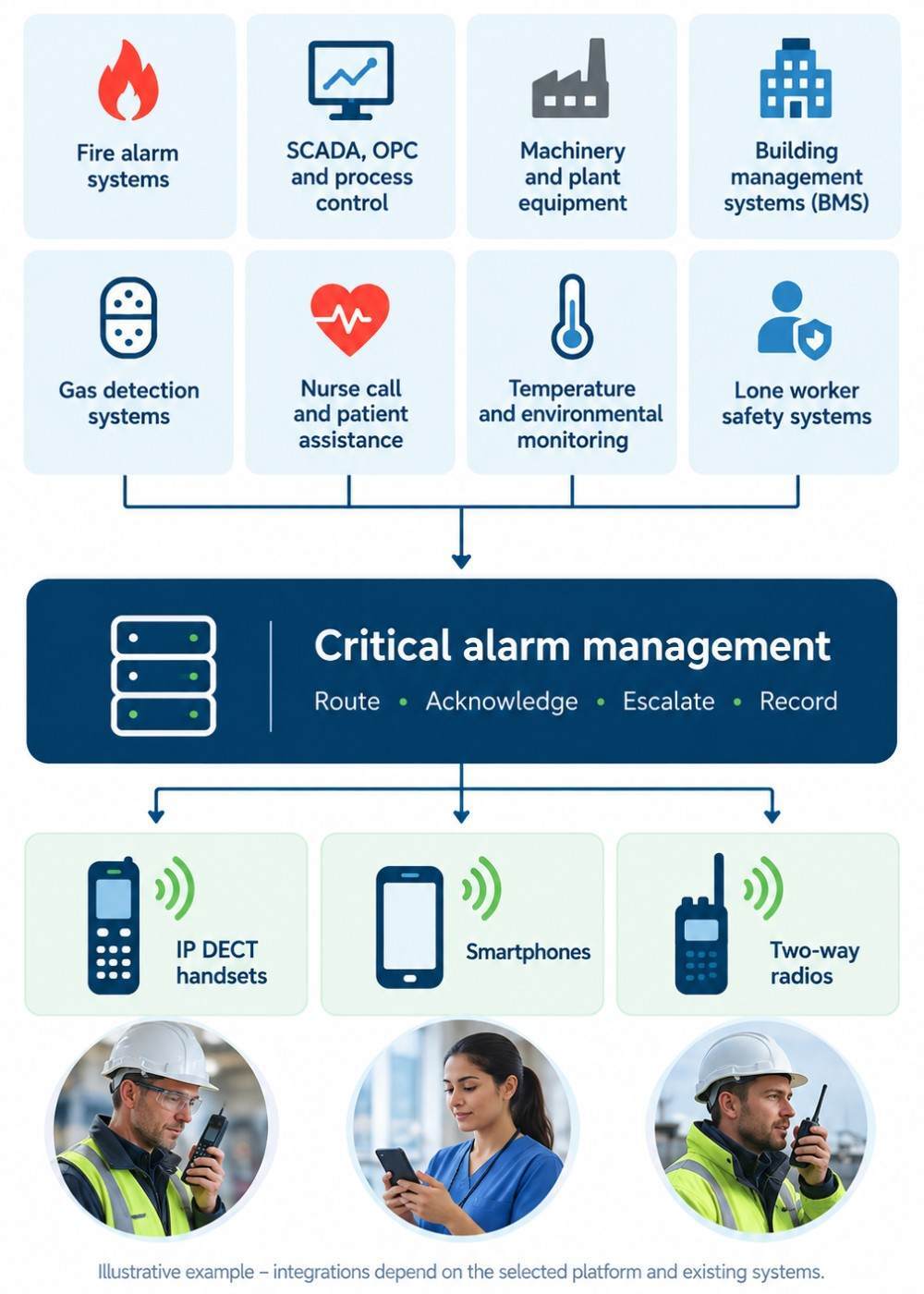
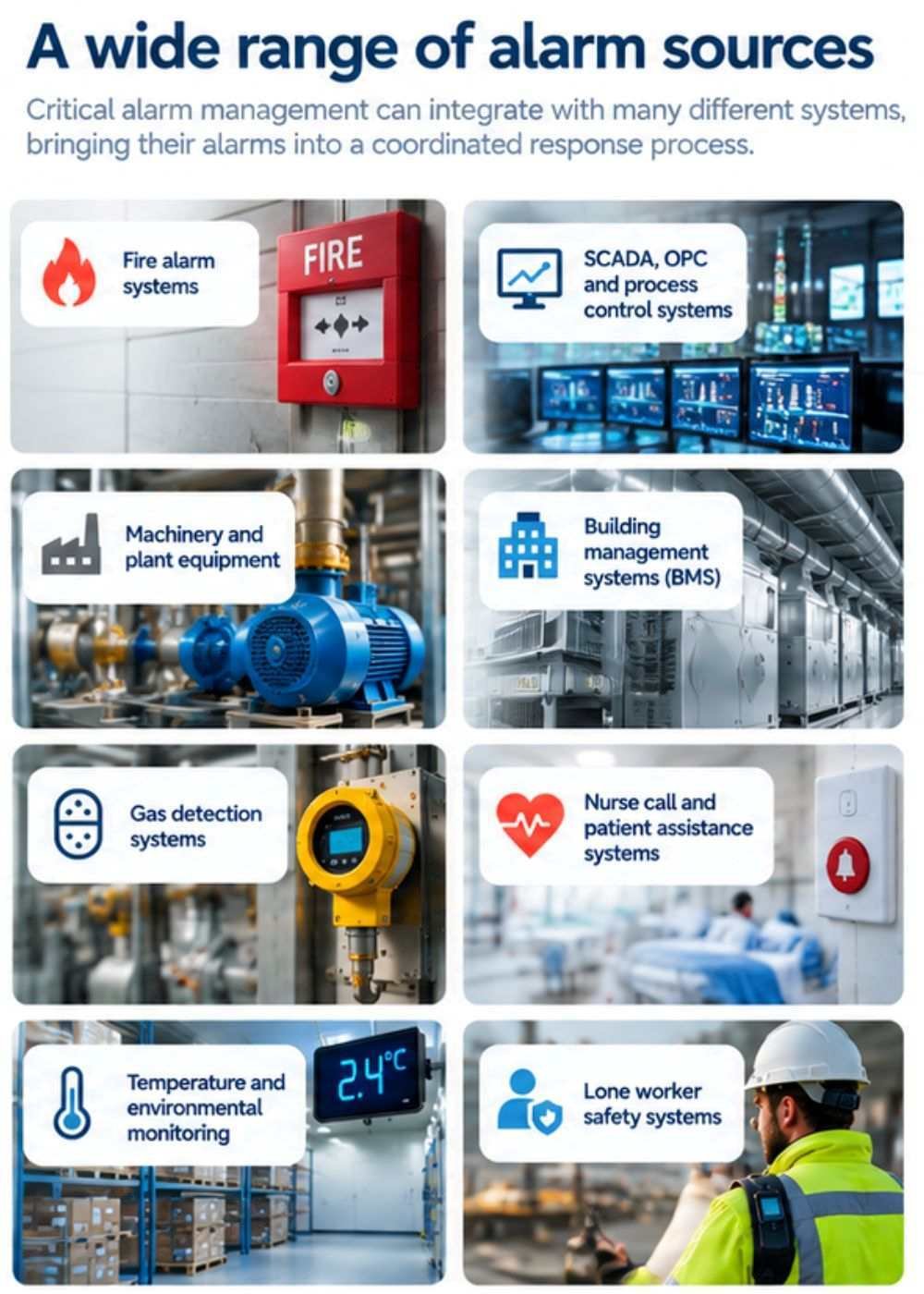
Critical alarm management software can integrate with a wide range of existing monitoring and safety systems, bringing different types of alarms into a coordinated response process. Examples include:
Compatible fire panels can trigger notifications to designated employees, including information about the building, affected zone or individual detector where supported.
Critical alarms from industrial processes and equipment can be distributed automatically to engineers and operational staff, even when they're working away from the control room.
Equipment faults, breakdowns and abnormal operating conditions can trigger notifications to maintenance teams, helping reduce response times and minimise disruption.
Alarms relating to heating, ventilation, air conditioning and other building services can be directed to facilities and maintenance personnel.
Compatible gas detectors can trigger notifications when hazardous conditions are detected, helping designated responders coordinate their response.
Nurse call notifications can be delivered to compatible mobile communication devices, allowing healthcare staff to receive requests for assistance while moving around a facility.
Temperature excursions, water leaks and other environmental alarms can be managed through predefined notification, acknowledgement and escalation procedures.
SOS, man-down and missed safety check alerts from lone worker devices and applications can be managed through the same coordinated response process as other critical alarms.
The available integration options depend on the existing equipment, its supported interfaces and the organisation's requirements.
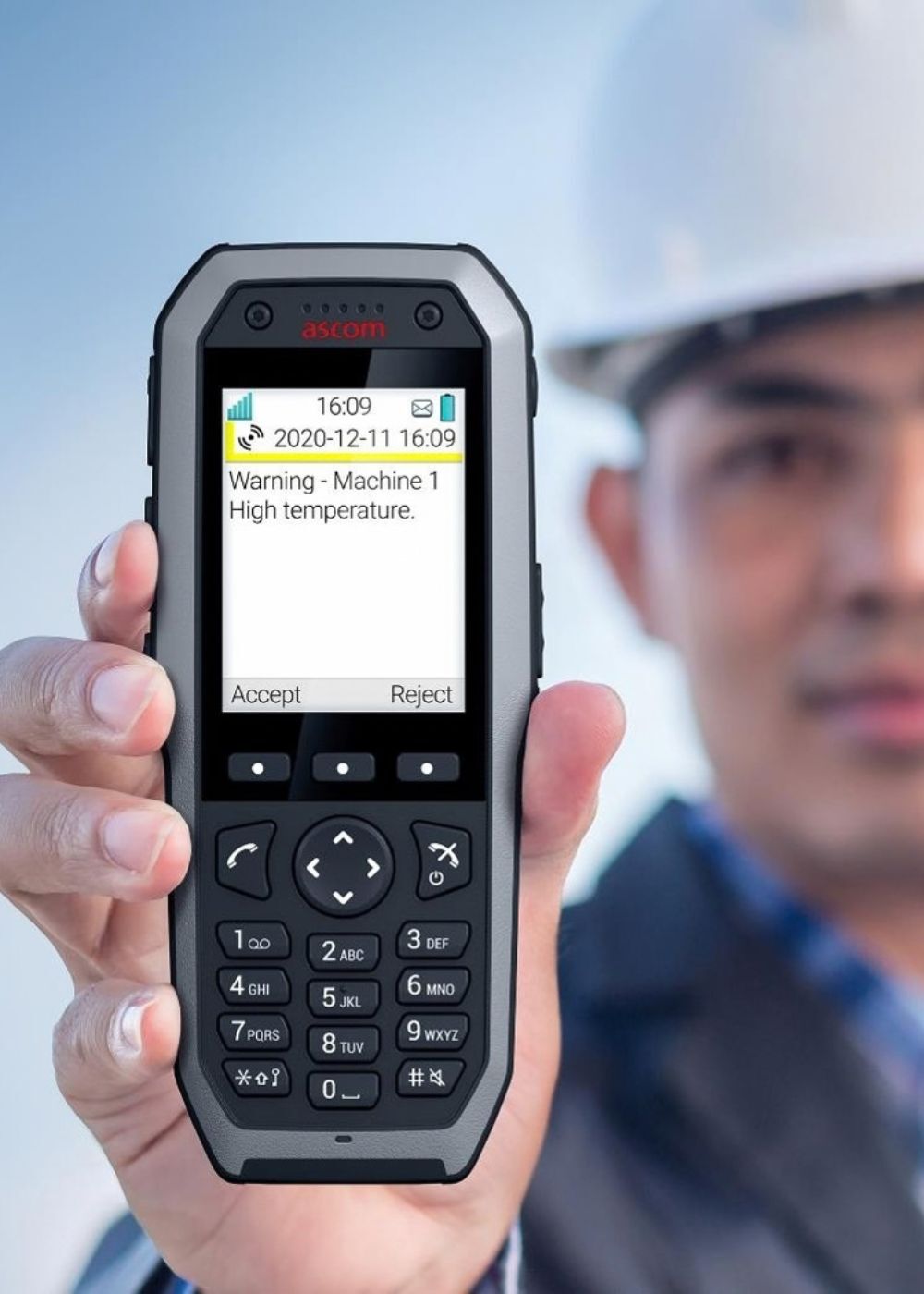
Most organisations already have communication systems in place, whether that's IP DECT handsets, two-way radios or smartphones.
Rather than replacing these devices, critical alarm management software can integrate with existing communication infrastructure, allowing employees to receive important notifications through the equipment they already use.
Depending on the platform and devices, employees may also be able to acknowledge alarms, share updates and coordinate their response directly from their handsets.
Where suitable communication devices aren't already available, we can recommend and supply appropriate equipment based on the working environment and operational requirements.
This approach helps organisations improve how critical alarms are managed while making better use of their existing communication investments.
Critical alarm management is particularly valuable for organisations operating multiple monitoring systems, large facilities or safety-critical environments.
Manufacturing and industrial facilities can automatically notify engineers of machinery faults, process alarms and safety incidents, helping reduce disruption and downtime.
Hospitals and healthcare organisations can coordinate notifications from building services, nurse call systems and temperature monitoring equipment, helping staff respond while working across large facilities.
Utilities and infrastructure operators can manage alarms from SCADA systems, remote equipment, gas detectors and employee safety devices across multiple locations.
Universities, local authorities and commercial facilities can improve how building, security, environmental and safety alarms are communicated to responsible employees.
Although the applications differ, the objective remains the same: ensuring critical events receive an appropriate and coordinated response.
With more than 30 years' experience delivering business-critical communication and safety solutions, we help organisations connect their existing monitoring systems with the people responsible for responding to important events.
As an independent systems integrator, our expertise goes beyond supplying software. We design and implement solutions that bring together equipment from different manufacturers, communication technologies and operational response procedures.
Depending on the requirements, we use specialist alarm management platforms including NovaAlert and Aspect Link.
NovaAlert supports a wide range of interfaces, including OPC and ESPA, enabling detailed alarm information to be collected from compatible systems and distributed to IP DECT handsets, two-way radios and smartphones. Aspect Link supports alarms received through SMS, data messages or hardwired contacts, with notifications delivered to smartphones.
These different capabilities allow us to recommend the most suitable platform based on your existing systems and communication requirements.
We manage the process from initial assessment and system design through to installation, integration and ongoing maintenance, providing a single point of contact throughout the life of your solution.
ANT Telecom is also certified to ISO 9001, ISO 27001 and ISO 14001, giving customers confidence that we follow independently assessed processes for quality management, information security and environmental responsibility.
Yes, in many cases. Critical alarm management software can integrate with fire panels, SCADA, BMS, machinery controls and other monitoring or safety systems. The available options depend on the equipment and its supported interfaces.
Yes, alarms from different sources can be managed through a common process, while retaining individual priorities, response teams and escalation procedures.
The system can automatically escalate an unanswered alarm to another individual or response group after a predefined period, helping ensure important events aren't overlooked.
No, not necessarily. Critical alarms can be delivered through communication systems such as IP DECT and two-way radio, which don't rely on public mobile networks. Depending on the solution, alarms can also be sent to smartphones over Wi-Fi or using multi-net roaming sims. ANT Telecom can recommend the most suitable approach based on your existing communication infrastructure and site coverage.
No, it works alongside existing monitoring systems, improving how alarms are communicated and responses coordinated while allowing the original equipment to continue performing its primary function.
Critical alarm management software can maintain a record of who acknowledged an alarm, when they responded, any escalation activity and when the incident was closed. Depending on the platform, responders can also add notes and progress updates, providing a history of how the incident was managed.
Whether you're looking to integrate existing monitoring systems, improve alarm notifications or introduce more effective acknowledgement and escalation procedures, we can help.
We'll assess your existing infrastructure, understand your operational requirements and design a solution that helps your teams respond quickly and effectively. Fill in the form below to book a call with one our specialist.