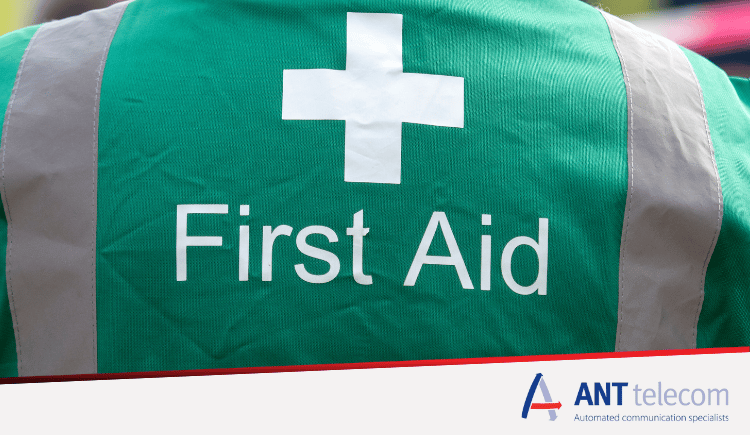
One-way systems slow down first aid response
Many organisations still rely on tannoy systems or one-way paging to manage first aid incidents. When someone requires assistance, reception or the gatehouse broadcasts an announcement or sends a paging message to the first aid team, detailing who needs help and where the incident has occurred.
On the surface, this seems effective. Everyone hears the message, and help should arrive quickly. But in reality, these systems lack coordination and confirmation — creating inefficiencies at exactly the moment a clear response is needed.
Too many responders… or none at all
Because tannoy and paging systems are one-way, first aiders have no way to communicate with each other in real time.
This often leads to one of two scenarios:
-
Everyone responds — multiple first aiders leave their tasks and converge on the same incident, meaning wasted time and unnecessary disruption.
-
No one responds — each first aider assumes someone else is attending, leaving the injured person waiting until the message is repeated.
Neither outcome is ideal. Time is lost, productivity is impacted, and most importantly, the injured person may not receive timely assistance. In busy manufacturing or industrial environments, this lack of coordination introduces avoidable risk.
Two-way communication using radio, DECT or smartphones
Digital mobile radio provides a far more effective way to manage first aid response because it enables instant, two-way communication.
When an incident occurs, a message or alert can be sent to the first aid team via radio. Team members can immediately communicate and confirm who is best placed to respond — ensuring one clear owner is assigned without delay.
The same approach can also be implemented using integrated messaging platforms on IP DECT handsets or smartphones. A group message or alarm is sent to the first aid team, received instantly on their device. One person accepts the task, and the rest of the team are automatically updated — removing ambiguity and duplication.
This ensures:
- Faster response times
- Clear accountability
- Minimal disruption to operations
- Confidence that incidents are being dealt with properly
A smarter approach to site-wide safety communication
First aid response is rarely an isolated requirement. In many industrial environments, it forms part of a wider need for reliable mobile communication, lone worker safety and alarm integration.
Radio, DECT and smartphone-based solutions can all play a role in creating a coordinated, site-wide approach — ensuring staff are contactable, alarms are not missed, and incidents are managed efficiently.
Learn more about our mobile solutions for safer, more productive workplaces, or contact us to discuss how the right communication technology could support your site.