Keeping your employees connected and protected is essential in hazardous working environments. However, areas where explosive gases, vapours or combustible dust may be present require communication and safety equipment that meets specific ATEX certification requirements.
Choosing suitable equipment is only part of the challenge. You’ll also need reliable communication coverage, effective lone worker protection and ways of ensuring critical alarms reach the right people quickly.
With over 30 years of experience supporting industrial organisations, ANT Telecom helps customers select, install and maintain ATEX-certified communication and safety solutions that improve employee safety and operational efficiency.
Employees working in intrinsically safe environments need appropriately certified equipment that allows them to communicate safely while carrying out their everyday activities.
However, large industrial buildings with metal structures, processing equipment and remote working areas can make reliable communication difficult, particularly where public mobile coverage is poor.
If you’re operating in complex plants, these challenges extend beyond making and receiving calls. Your maintenance engineers may need to receive critical process alarms while working away from a control room. Anyone working alone will need a reliable way to raise an emergency alert, and your response teams must be able to communicate and coordinate their activities quickly when an incident occurs.
Addressing these challenges requires more than selecting an ATEX-certified handset. It involves ensuring your communication infrastructure, employee safety features and alarm management processes work together effectively.


ATEX requirements apply to equipment used in designated hazardous areas where potentially explosive atmospheres may occur.
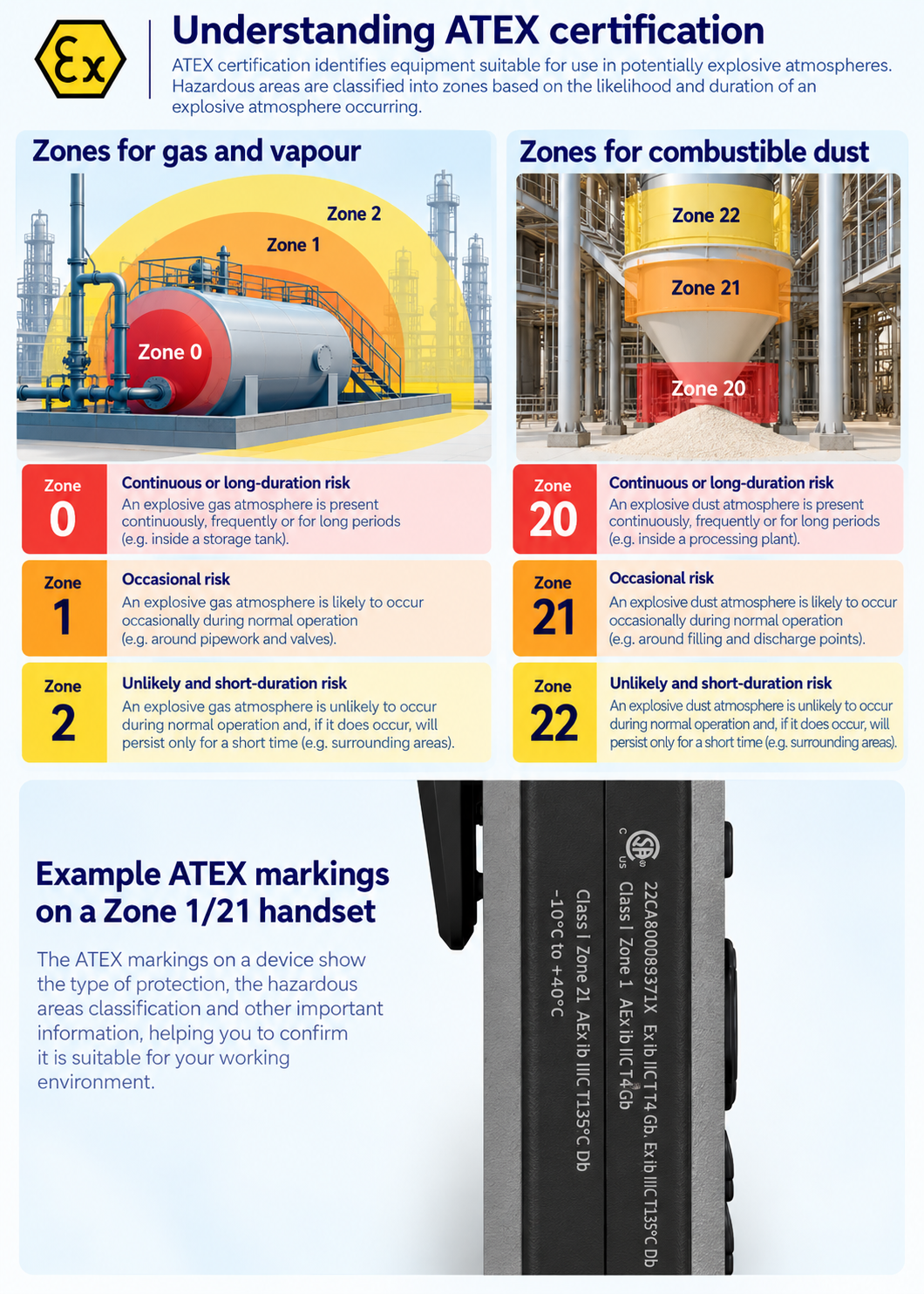
These areas are classified into zones according to how frequently an explosive atmosphere is likely to be present and how long it may persist.
For gases and vapours, the classifications are Zone 0, Zone 1 and Zone 2. For combustible dust, the equivalent classifications are Zone 20, Zone 21 and Zone 22.
Equipment must be suitable for the relevant hazardous area, taking account of the zone classification, gas or dust group, temperature requirements and other operating conditions.
For example, a communication device certified for Zone 1 gas and Zone 21 dust environments may be suitable for certain hazardous industrial applications, but that does not automatically make it suitable for every ATEX-classified area.
ATEX markings on equipment help identify its certification and protection characteristics. Understanding these markings is important when selecting devices for a particular working environment.
We can help you to identify communication equipment with the appropriate certification for your operational requirements.
Whether coordinating routine maintenance, discussing production issues or responding to an emergency, your employees need a dependable way to communicate with colleagues, supervisors and control rooms.
We provide ATEX communication systems based on digital two-way radio, IP DECT and Push-to-Talk over Cellular (PoC). Each technology offers different advantages depending on the working environment, existing infrastructure and your communication requirements.
Dedicated radio and IP DECT systems can provide coverage independently of public mobile networks, while PoC enables communication over compatible 4G / 5G and Wi-Fi networks. With the right infrastructure, organisations can maintain communication across challenging industrial sites and between teams working in different locations.
Many ATEX communication devices can also support additional safety and messaging features, allowing employees to communicate, raise emergency alerts and receive important information using the same handset.


Employees working alone in hazardous areas may face additional risks, particularly when undertaking maintenance activities, working in remote sections of a plant or operating outside normal working hours.
If an employee has an accident, becomes incapacitated or encounters a dangerous situation, they may be unable to contact colleagues using conventional communication methods.
Compatible ATEX communication devices can incorporate lone worker protection features, including dedicated SOS buttons, man-down detection and timed safety checks. These features allow employees to raise an emergency alarm manually or, where supported, automatically when a potential incident is detected.
Alerts can be distributed to designated colleagues or response teams, providing information to help them identify the employee and coordinate assistance. Depending on the technology and available infrastructure, this may include GPS coordinates or indoor location information.
If you only require lone worker protection, dedicated ATEX safety devices are also available without the need to introduce a wider communication system.
If you have teams working in environments where hazardous gases may be present, personal gas detection can provide an additional layer of protection.
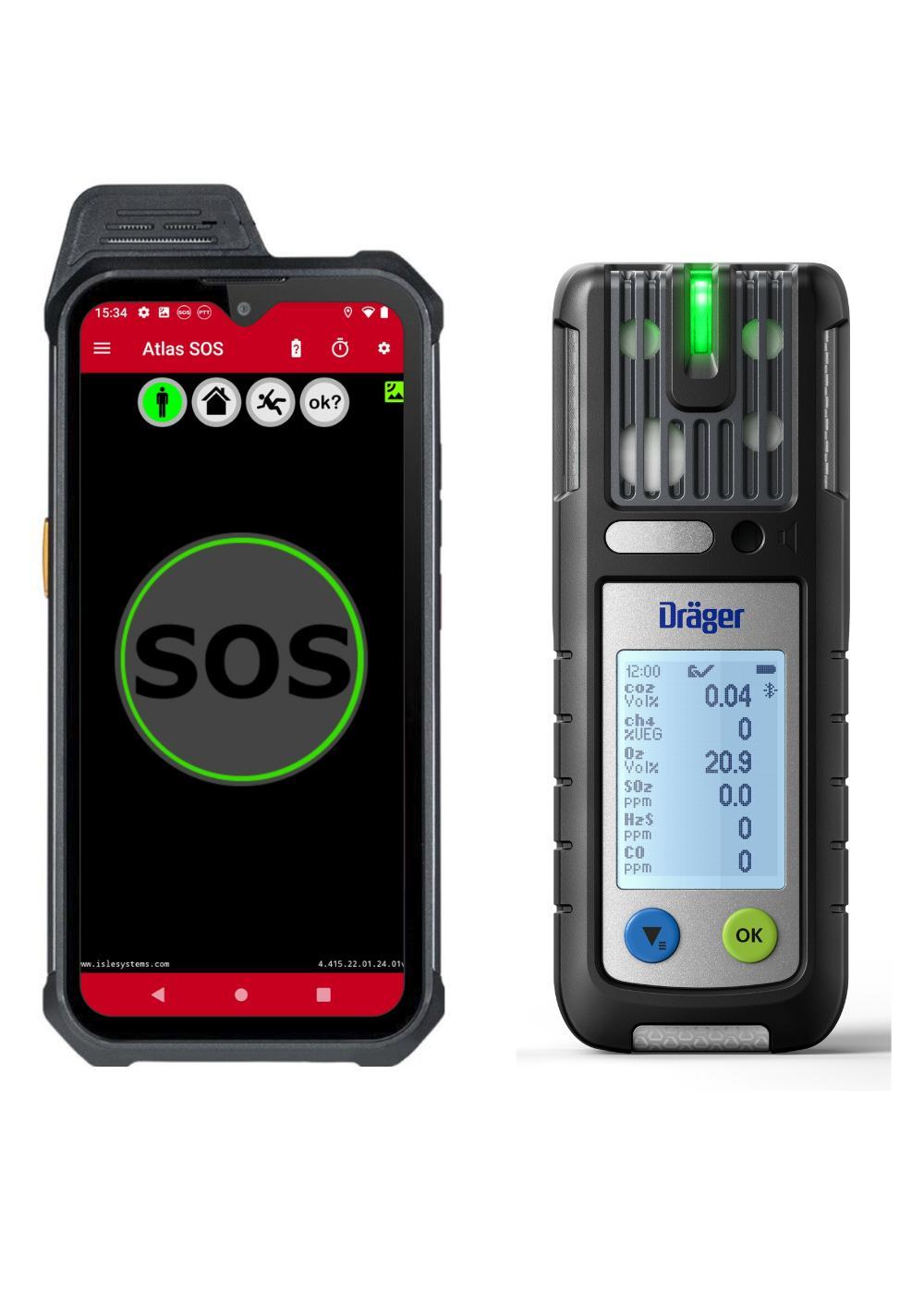
We can integrate compatible portable gas detectors, including Dräger Bluetooth devices, with our Aspect Link lone worker solution.
When a gas alarm is triggered, an alert can be automatically distributed to designated responders, helping them identify the incident and coordinate assistance.


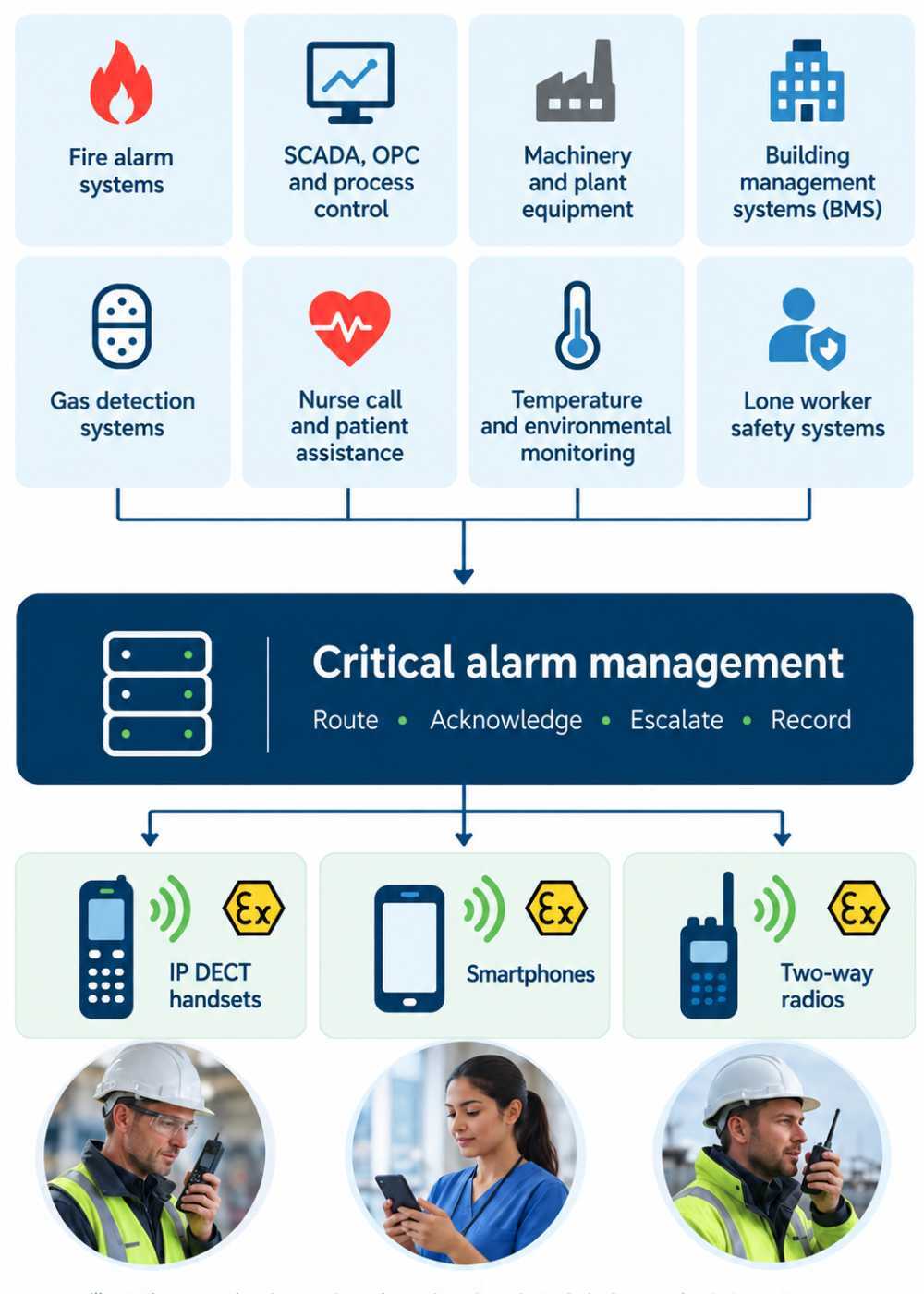
Industrial plants often rely on multiple monitoring and control systems, including fire detection, fixed gas detection, SCADA, machinery and building management systems. However, alarms may only be displayed on local panels or control room screens, potentially delaying the response when employees are working elsewhere on site.
We can integrate these systems with a critical alarm management platform, enabling alerts to be sent directly to designated employees using compatible ATEX radios, IP DECT phones or smartphones. Depending on the system, alerts can include information about the alarm source, acknowledgement options and escalation procedures.
For example, integrating fire alarm systems can help your fire marshals identify the location of an incident and direct employees and visitors towards safer evacuation routes. Similarly, sending effluent alarms directly to your maintenance teams can enable a faster response to problems that could otherwise interrupt production.
By ensuring critical information reaches the right people quickly, you can improve employee safety, minimise disruption and keep operations running efficiently.
We supply a range of ATEX-certified communication and safety devices from established manufacturers.
We can recommend suitable equipment from different manufacturers, helping you meet certification requirements while providing the communication and safety functions your teams need. These are detailed below.
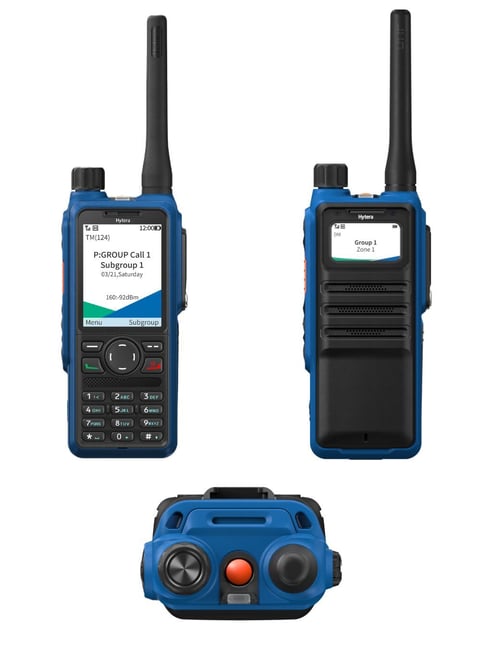
ATEX two-way radios provide instant push-to-talk communication between individuals and groups, making them particularly suitable for industrial environments where teams need to communicate quickly.
Unlike 4G / 5G devices, conventional two-way radios don't depend on public mobile networks. With appropriately designed radio infrastructure, they can provide coverage across large industrial sites, including areas where mobile reception is unreliable.
Modern digital ATEX radios can also support emergency calling, man-down detection and other safety features, helping you to improve communication and employee protection using the same device.
We supply ATEX two-way radios from manufacturers including Hytera and Motorola and Entel, with repeaters available where additional coverage is required.
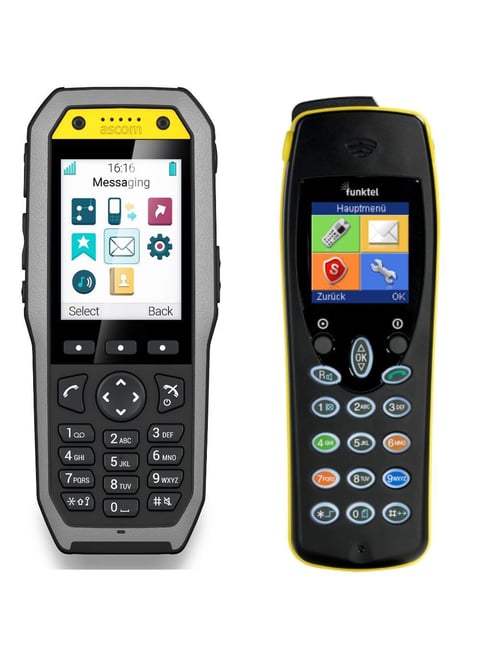
ATEX IP DECT handsets provide wireless telephone communication across industrial facilities using dedicated on-site infrastructure.
They are particularly useful where employees need to make and receive internal or external telephone calls while moving between production areas, maintenance facilities and other parts of a site.
Compatible handsets can also support messaging, SOS and man-down functionality. Integration with suitable alarm management systems enables employees to receive critical alerts wherever they are working.
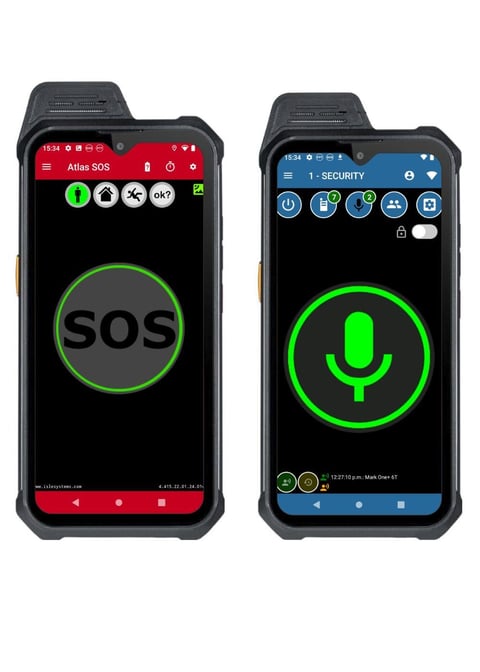
ATEX-certified smartphones and dedicated PoC radios enable instant individual and group communication over compatible 4G, 5G or Wi-Fi networks.
These devices can be particularly useful for organisations with employees working across different sites or geographical locations, provided suitable network coverage is available.
Compatible ATEX smartphones have integrated SoS and Push to Talk (PTT) buttons and support applications such as Atlas SOS lone worker protection, Critical Messenger and PTT, allowing employees to access multiple communication and safety functions using one device.
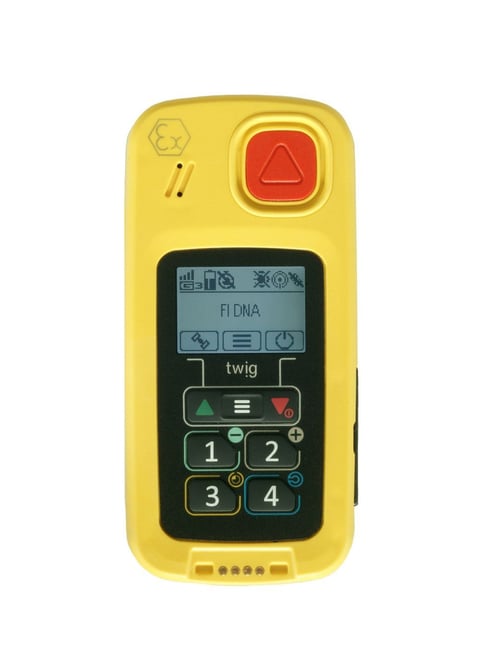
Not every organisation requires a complete communication system to protect employees working alone.
We also supply dedicated ATEX lone worker devices such as the Atlas Protector + EX.
These solutions provide employees with a straightforward way to raise emergency alerts without requiring the wider communication capabilities of a radio or IP DECT system.
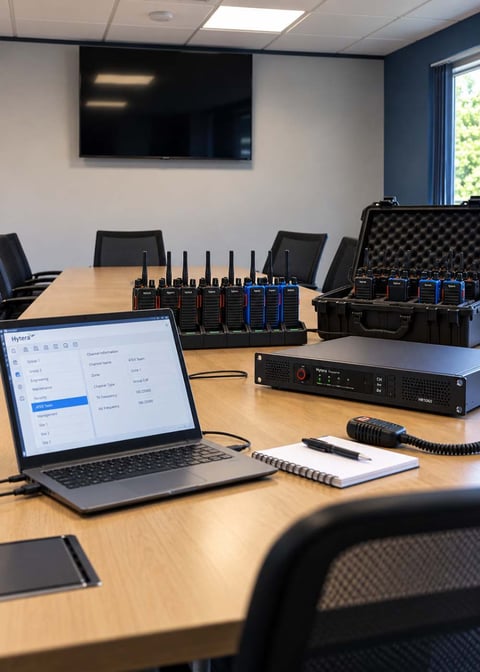
For temporary projects, planned maintenance shutdowns or other operational requirements, we provide intrinsically safe radio hire.
ATEX-certified two-way radios are available for short- and long-term hire, with repeaters and supporting infrastructure available where required.
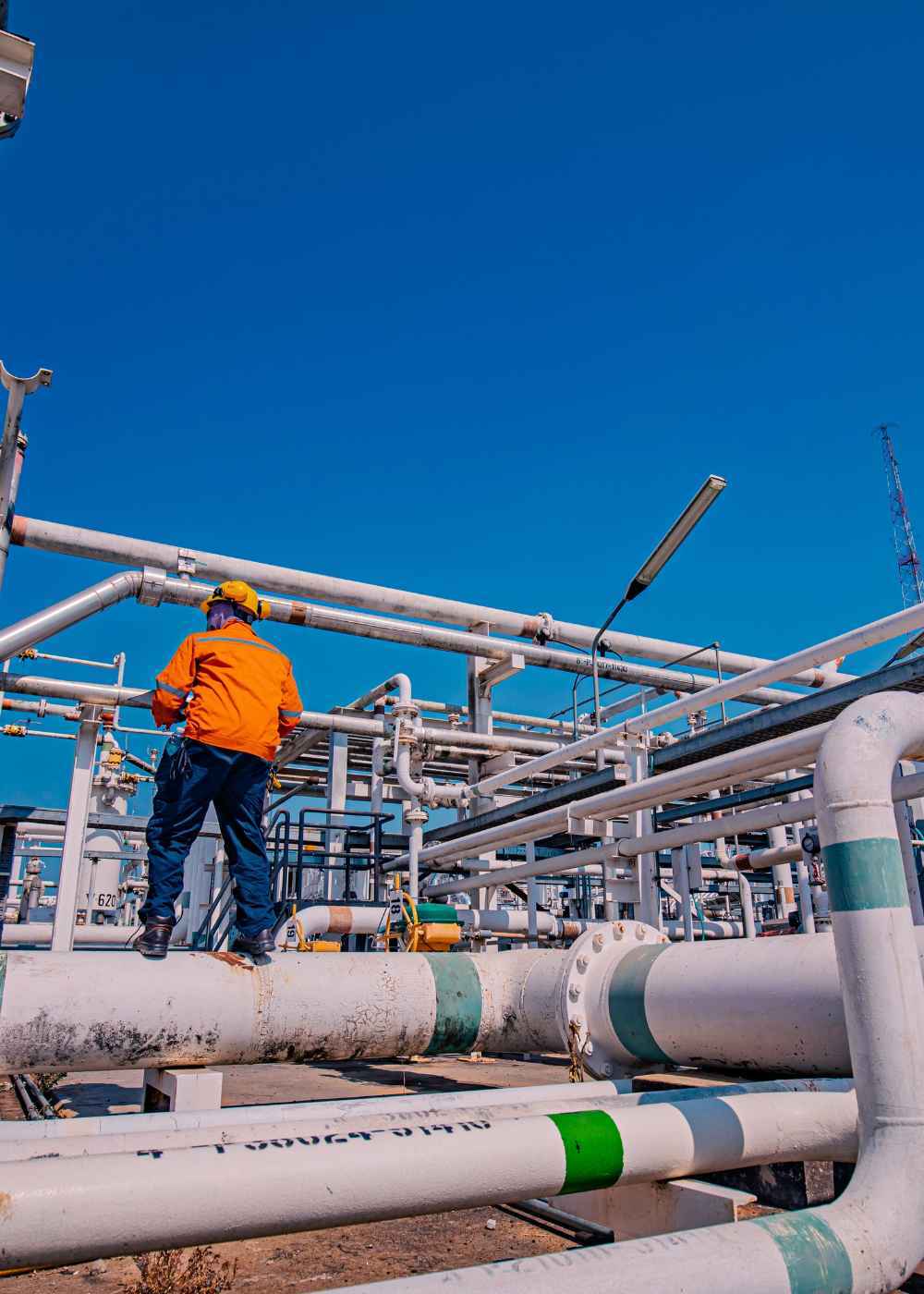
ATEX-certified communication and safety equipment is used across industries where flammable gases, vapours or combustible dust can create potentially explosive atmospheres.
Chemical and pharmaceutical manufacturing: Employees working with solvents, chemicals and other potentially hazardous substances may require intrinsically safe communication equipment when operating in classified areas. Reliable communication also helps teams coordinate maintenance, production activities and emergency responses as demonstrated at Sherwin Williams.
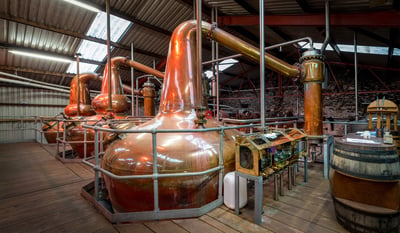
Distilleries and food production: Alcohol vapours and combustible dust can create hazardous areas in certain production and processing environments. ATEX communication systems help employees remain connected while moving between different parts of a facility. This was an important consideration at Tamdhu Distillery, where ATEX-certified DECT handsets were supplied to improve communication and support lone worker safety.
Oil, gas and petrochemicals: Refineries, processing plants, storage facilities and offshore installations may require ATEX-certified devices for employees working in areas where flammable gases or vapours are present.
Utilities and water treatment: Certain wastewater treatment facilities, pumping stations and other utilities installations can contain hazardous areas where flammable gases may accumulate. Reliable communication is also important across geographically dispersed facilities. Our work with Severn Trent Water illustrates how communication systems can support operational teams, lone worker protection and the delivery of critical alarms.
Manufacturing and industrial processing: Facilities handling combustible powders, dust or flammable materials may require appropriately certified devices in designated hazardous areas, particularly where employees need to communicate across large or complex sites.
The appropriate equipment depends on the hazardous area classification, working environment and operational requirements rather than the industry alone.
Selecting the right ATEX communication system involves more than choosing a handset with the appropriate certification. Organisations need to consider how employees communicate, where they work, the coverage available and whether additional safety or alarm management features are required.
Taking the time to get this right can deliver long-term benefits. A well-designed solution can improve communication, reduce delays, strengthen employee safety and help teams work more efficiently, while providing a system that can adapt as operational requirements change.
We make this process straightforward. We take the time to understand your challenges, assess your existing infrastructure and recommend suitable technologies. Where necessary, we can also undertake detailed coverage surveys to ensure the proposed solution meets your requirements.
With over 30 years of experience supporting industrial communication systems, ANT Telecom helps organisations design, implement and maintain solutions for challenging working environments.
As an independent system integrator, we can recommend suitable technologies from different manufacturers rather than being restricted to a single product range.
We take responsibility for the complete solution, from system design and equipment supply through to installation, integration and ongoing maintenance. This gives customers a single point of contact throughout the project and for ongoing support, rather than having to coordinate multiple suppliers.
Our expertise also extends beyond communication. Where appropriate, we can incorporate lone worker protection and critical alarm management to create a coordinated solution that improves employee safety and operational efficiency.
For example, at Sherwin Williams' chemical manufacturing facility, we helped their teams operate far more effectively across their site, by providing them with the right infrastructure to support ATEX-certified radios.
We also hold ISO 9001, ISO 27001 and ISO 14001 certifications, demonstrating our commitment to independently assessed processes for quality management, information security and environmental management.
These classifications describe how frequently an explosive gas atmosphere is expected to occur. Zone 0 indicates continuous, frequent or long-duration presence, Zone 1 indicates occasional occurrence during normal operation, and Zone 2 indicates that an explosive atmosphere is unlikely during normal operation and, if it occurs, will persist only briefly. Equivalent classifications for combustible dust are Zones 20, 21 and 22.
ATEX certification means that a radio handset or phone has been tested and verified to operate safely in a hazardous environment without generating a spark which could lead to a fire or an explosion.
Staff should never use a normal smartphone in an ATEX zone as they pose a risk of electrical sparks, high temperatures and battery ignitions that can set off an explosion. Instead, staff will need an ATEX phone or ATEX radio.
An intrinsically safe radio is designed to limit electrical and thermal energy so it cannot ignite a potentially explosive atmosphere under its specified operating conditions. To be ATEX-certified, the radio must also meet the relevant safety requirements and undergo the appropriate conformity assessment.
Once approved, radios are manufactured to the certified design and specification. The ATEX marking identifies the hazardous areas and conditions in which the radio is suitable for use.
Explosion proof is the phrase many people search for, but the thing to check is the ATEX certification and zone marking on the device. Every phone and handset on this page is ATEX certified, and its zone marking shows where it can be used, so match that marking to the zones on your site.
Many of the ATEX devices we supply are compatible with a wide range of alarm handling and DECT systems. The exact compatibility depends on the type of device you choose and your existing infrastructure. The best way to confirm is to ask us for a site assessment.
Check the zone marking on each device against the zones on your site. Across the range on this page, we supply Zone 0/20, Zone 1/21 and Zone 2/22 devices.
Yes, ANT Telecom can integrate compatible external systems with an appropriate critical alarm management platform, allowing alerts to be distributed to designated employees using supported ATEX radios, DECT phones or smartphones.
Yes, ANT Telecom offers short- and long-term ATEX radio hire, with repeaters available where additional coverage is required.
Whether you're experiencing communication difficulties, looking to improve lone worker protection or need to distribute critical alarms more effectively, ANT Telecom can help.
Our specialists can visit your site to understand your working environment, existing infrastructure and operational challenges.
We'll discuss your requirements, identify suitable communication and safety technologies and explain how they could integrate with your existing systems.
Where appropriate, we can provide indicative pricing and arrange a more detailed technical or coverage survey. Book a site assessment or call us to talk to us first.
Contact us to discuss your requirements and we will recommend the right solution for you. Alternatively, we can set up a demonstration or trial to demonstrate how a solution would work for your business.