
Industrial communication systems keep teams connected on sites where standard mobiles and Wi-Fi cannot be relied on. ANT Telecom designs, installs and supports site wide communication systems built on IP DECT, two-way radio and push to talk over cellular (PoC), with alarm integration and lone worker protection available as options where needed.
This page explains what these systems do, how the three core technologies compare and how to choose between them. If you would rather talk it through against your own site, book a site assessment and one of our consultants will walk it with you.
An industrial communication system is a dedicated voice and messaging network that connects staff across a site or estate, independent of public mobile coverage. Unlike consumer kit, it is engineered for reliability in harsh environments, for integration with alarm and safety systems, and for scale across large or multi-site operations.
A typical system combines wireless infrastructure (DECT base stations, radio repeaters or mobile network coverage), handsets matched to the job and the environment, and a software layer that routes alarms and messages to the right people. The driver for most operators is business critical communication: making sure a fire alarm, machine fault, gas alert or call for help reaches the right person first time, every time. That is the standard we design to.
Steel-framed buildings, plant rooms, basements and rural locations routinely block or degrade public mobile signal, and Wi-Fi built for data was never designed to carry safety-critical voice. Consumer handsets add their own problems: they are not rugged, not certified for hazardous areas and have no instant group calling.
The consequence is operational as much as technical. Staff walk the site to find each other, engineers sit in control rooms waiting for alarms they could receive on the move, and when an incident happens in a coverage blackspot the response is only as fast as the nearest working phone. The HSE recorded 124 workers killed in work-related accidents in Great Britain in 2024/25 (HSE, July 2025), with construction the largest single contributor. In an emergency, the speed at which an alert reaches a responder matters. Dedicated communication systems remove the dependency on networks you do not control.
Most sites need one of three core technologies, and many combine two. Each has its own page covering devices, features and typical deployments in more depth.
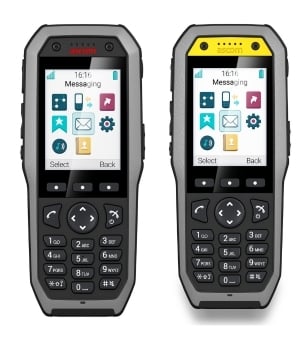
IP DECT gives you telephony-grade wireless voice across a defined site, on a dedicated frequency band that does not compete with Wi-Fi or public networks. Coverage is designed through a site survey, so it works in the plant rooms and basements where mobiles fail. Handsets support internal and external one-to-one and group calls, text messaging, optional lone worker protection and integration with third party systems such as building management and gate intercoms. It is the usual choice for manufacturing plants, hospitals, hotels and secure sites where staff need a reliable handset that simply works, without the distraction of a smartphone. Explore our IP DECT phone systems.
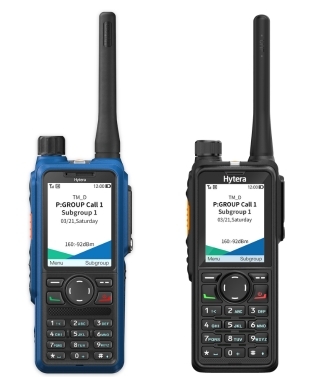
Two-way digital radio delivers instant push to talk communication to whole teams or individual team groups at once, with no call setup and no reliance on public networks. Hardware is built for hard use and long shifts, which is why radio remains the default on construction sites, wind farms, water treatment works and event sites. As an independent integrator we specify across manufacturers, including Motorola, Hytera and Entel, and design coverage around how your site actually operates. Radios can carry lone worker protection and receive alarms from site systems, so the same device that coordinates the day-to-day also carries the safety function. See our two-way radio systems.
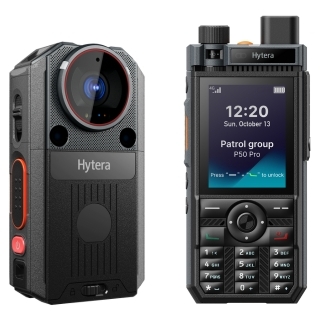
PoC combines the simplicity of push to talk with the reach of 4G and 5G networks, so teams stay connected across multiple sites, town centres or an entire region. Devices range from ruggedised handhelds to body worn cameras with an SOS button and live video streaming, letting a control room see and hear an incident as it happens. Because coverage rides on mobile networks, PoC suits field teams, multi-site estates and organisations replacing an ageing radio fleet that has outgrown its site boundary. Read about our push to talk over cellular solution.
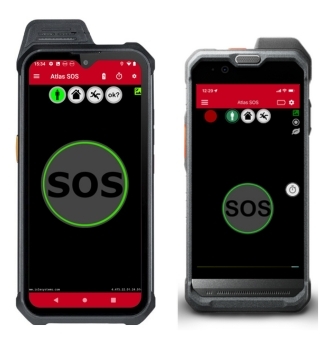
Industrial smartphones round out the portfolio. Rugged and ATEX-rated models run lone worker and push to talk apps, and alarm integration on a single device, which suits teams who also need other operational and compliance apps, email, forms or photos in the field
Choose IP DECT when you need dependable, telephony-grade voice and alarm integration within a defined site. Choose two-way radio when instant group communication matters most, or where there is no usable network at all. Choose PoC when teams work across multiple sites or on the move. The table below summarises the differences.
|
|
IP DECT |
TWO-WAY RADIO |
POC |
|
Coverage |
Site wide, designed via survey |
Site wide, including very large or remote sites |
Regional or national via 4G/5G |
|
Call style |
Internal and external one-to-one calls plus groups |
Instant group push to talk |
Instant push to talk plus photos, video and messaging |
|
Infrastructure |
Base stations on your network |
Standalone, repeaters where needed |
Mobile networks plus a managed platform |
|
Alarm integration |
Strong: fire, SCADA, building management, nurse call |
Yes: alarms direct to handsets |
Yes, plus live video to a control room |
|
Lone worker |
Optional on the handset, including SOS, person-down and location |
Optional on the radio, including SOS, person-down and location |
Optional, including SOS, person-down and location |
|
Best for |
Manufacturing, hospitals, hotels |
Construction, utilities, events |
Multi-site operations and field teams |
In practice, many sites combine technologies: DECT or radio on site with PoC for the field team. The right mix depends on your buildings, your coverage and what your alarms need to reach. That is exactly what a site assessment establishes.
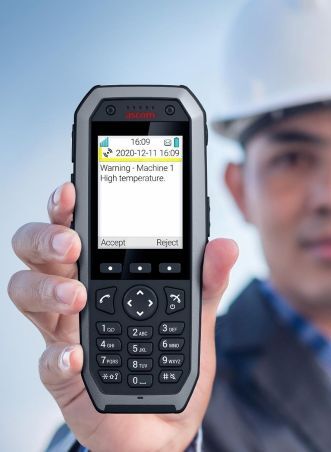
Any alarm that matters can be delivered straight to the handsets your teams already carry. Our critical alarm management platform sits between your site systems and your communication devices, routing alerts to the right responder, escalating if nobody acts and logging the whole event for audit.
Typical integrations include fire alarm panels, SCADA and process control, building management systems, gas detection, temperature monitoring and door or gate entry. Engineers no longer need to stay within sight of a control screen: the alarm finds them, wherever they are on site. For maintenance and operations teams, that means faster response, less downtime and a clear record that critical alerts were received and actioned.
Every technology on this page can carry lone worker protection: SOS buttons, man down detection, timed check-ins and location reporting, with alarms routed to colleagues or a manned control point in seconds. If you are weighing up how lone worker protection fits alongside your communication system, our lone worker safety guide explains the options and the escalation workflows behind them.
Yes. We supply ATEX-certified devices across the portfolio: intrinsically safe DECT handsets, radios and smartphones certified for zones where explosive gases, vapours or dust may be present. Petrochemical plants, distilleries and chemical processing sites run the same site wide communication and alarm workflows as any other site, on hardware that is safe to carry into the hazardous zone.
Large buildings, noisy floors and patchy indoor coverage make manufacturing sites the classic DECT and radio environment. Machine and process alarms delivered to handsets keep engineering teams mobile instead of tied to control rooms. Read how a global polymer manufacturer approached it in our Synthomer case study.
Dispersed, hazardous and often remote, utility sites mix technologies: radio for wind farms and treatment works with no mobile signal, PoC for field teams covering a region, and SCADA alarm integration so operators can move around site without missing a critical event. See our Severn Trent case study.
Construction recorded more worker fatalities than any other industry in 2024/25 (HSE). Sites change shape weekly, subcontractors come and go, and coverage is rarely guaranteed. Two-way radio gives site managers instant, all-team communication from day one, with hire options for project-length deployments and ATEX models for restricted zones.
In hospitals, communication is clinical infrastructure. DECT handsets integrated with nurse call and fire systems keep ward staff reachable, while estates and security teams use radio or PoC across the wider campus. Alarm escalation with a full audit trail supports compliance as well as response times.
The same design principles carry into distilleries, hotels, secure residential settings and education. If your environment is unusual, that is normal: most of the sites we work on are.
A consultant walks your site with you, looking at how it operates in reality: where coverage fails, where people work alone, which alarms and systems need to reach mobile devices, and how the buildings themselves behave. You get a recommended design with options, sized for both current operations and future change, with no obligation attached.
Deployment is handled end to end: professional installation, integration with existing telephony and alarm systems, coverage testing and role-appropriate training so staff are confident from day one. Support continues after go-live from people who know your site and your system, and as your operation changes we help the solution change with it.
We are an independent integrator, not a box shifter. We have spent more than 30 years designing communication solutions around how sites actually operate, specifying across manufacturers rather than pushing a single stack, and we hold ISO 9001 and Cyber Essentials certification for quality management and cyber security. Organisations including Diageo, SSE, Severn Trent and Network Rail trust us with their site communication, and most of our customer relationships run for many years because the support does not stop at go-live.
IP DECT is a dedicated wireless voice network installed on your site, with coverage designed through a survey and no dependence on public networks. PoC runs over 4G and 5G, so it covers teams anywhere with mobile signal. DECT suits a defined site; PoC suits field teams and multi-site operations.
IP DECT and two-way radio both run entirely on their own infrastructure, so they work in basements, plant rooms and remote locations with no mobile coverage at all. PoC needs a mobile network, though multi-network SIMs keep devices on whichever network is strongest at any location.
Yes. DECT scales across buildings with additional base stations, radio covers large single sites with repeaters, and PoC connects any number of sites over mobile networks. Many customers combine them under one alarm management platform so every site follows the same escalation process.
Yes. Fire panels, SCADA and process control, building management, gas detection and nurse call systems can all deliver alarms directly to DECT handsets, radios or PoC devices, with automatic escalation if the first responder does not acknowledge. See our critical alarm management page for how routing and escalation work.
Yes, for events, seasonal peaks and project-length deployments such as construction phases. Hire fleets are configured before dispatch, so radios arrive ready to use, and intrinsically safe models are available for hazardous areas.
Tell us how your site operates and where communication lets you down, and we will design a solution around it. Fill in the form below to book a site assessment or call us to talk it through first.